HOW IT WORKS & WHAT WE DO
TRAP NEUTER RETURN
It is the process in which feral, outdoor cats are humanely trapped, sterilized, vaccinated, then released back to where they were found. These cats are not abandoned. They are feral and cannot be brought indoors. Maintained feral cat colonies have a caretaker that keeps them fed and cared for. Being sterilized means no more kittens will be born and the colony will shrink naturally over time.
TNR STANDS FOR TRAP NEUTER RETURN.
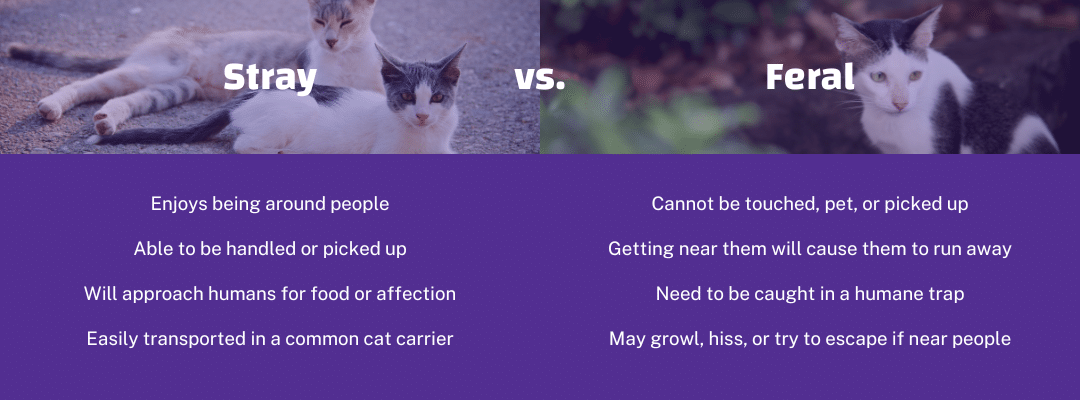
GRAPHIC BY THE SAN ANTONIO HUMANE SOCIETY
It is imperative that any person feeding or caring for feral, outdoor cats makes sure they are spayed and neutered. Creating a ‘perfect’ environment for them to multiply will only lead to more death, suffering, and overbreeding without being vaccinated and sterilized.
One female cat can have a litter of 2-6 kittens at least twice a year. Each of those kittens will hit sexual maturity at 4-6 months of age and the cycle will continue. 75% of kittens die outdoors before hitting six months of age. Spay/neuter is the key to stopping not only the overpopulation crisis overwhelming communities and shelters, but to helping slow the spread of disease and stop the suffering of cats and kittens outside.
TRAP NEUTER RETURN HELPS:
01
DECREASE INJURY
With their hormones at bay, male cats are much less likely to have territorial disputes and calm down being around other cats! It lessens how often they get injured and keeps colonies a lot less chaotic.
02
DECREASE DISEASE
TNR’d cats are vaccinated for rabies and FVRCP they will no longer spread diseases like FIV via sexual contact. Bite wound transmission will also decrease because they become much less territorial and aggressive.
03
MAKE HAPPY CATS
TNR’d cats will almost always stick close to their colony and be less likely to wander far away. Without kittens or heat cycles to worry about, they can live more comfortable, relaxed lives.
With support from the public, we are able to offer TNR services across San Antonio, TX.
WHAT WE DO
OUR GOALS ARE ALWAYS TO:
Sterilize and vaccinate all cats in a colony.
Give veterinary care to any cats needing it -- that means dental work, amputations, wound care, antibiotics, etc.
Intake any friendly or semi-friendly kittens and cats to place up for adoption.
Help colony caregivers with continued for the cats whether that is sterilizing any new cats that show up or providing food from donations.
Depending on how many cats are on the property or area we are working, it can take several weeks to trap and spay/neuter all of them!
Once a colony is taken care of, we expect there to be one or two cats to show up over time. You can always contact us to make sure we continue to make sure they are all sterilized.
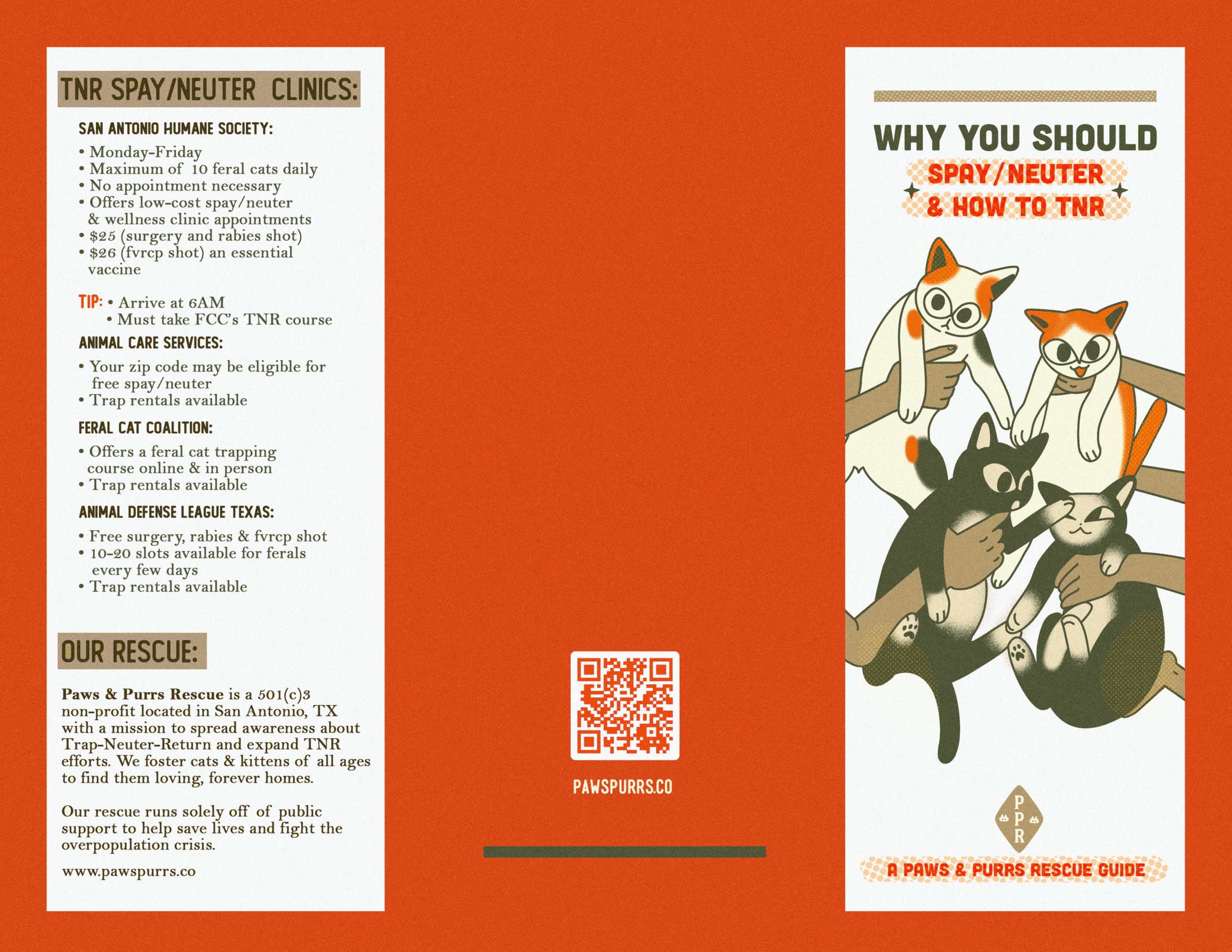
$25 PER CAT to trap, spay/neuter & vaccinate. (Your ability to help us cover surgery costs will never impede on our willingness to work with you. The City of San Antonio also offers free spay/neuter for those under qualifying zip codes.)
Permission to trap on the property: If it is not your property, you need to be in contact with the owner and have permission for us to be there to trap cats. We will not trespass on private property for our own safety.
Put the cats on a feeding schedule: To make trapping as easy as possible, you must be feeding the cats daily -- dry or wet food.
WHAT WE NEED
WAYS YOU CAN HELP
Holding the cats in a garage (dependent on weather) or indoors and feeding them the day(s) before and after surgery.
Transportation / picking up at the Humane Society after surgery.
LEARN TO TRAP & TRANSPORT! We will guide you and you can do it all on your own with our traps.
HOW IT WORKS
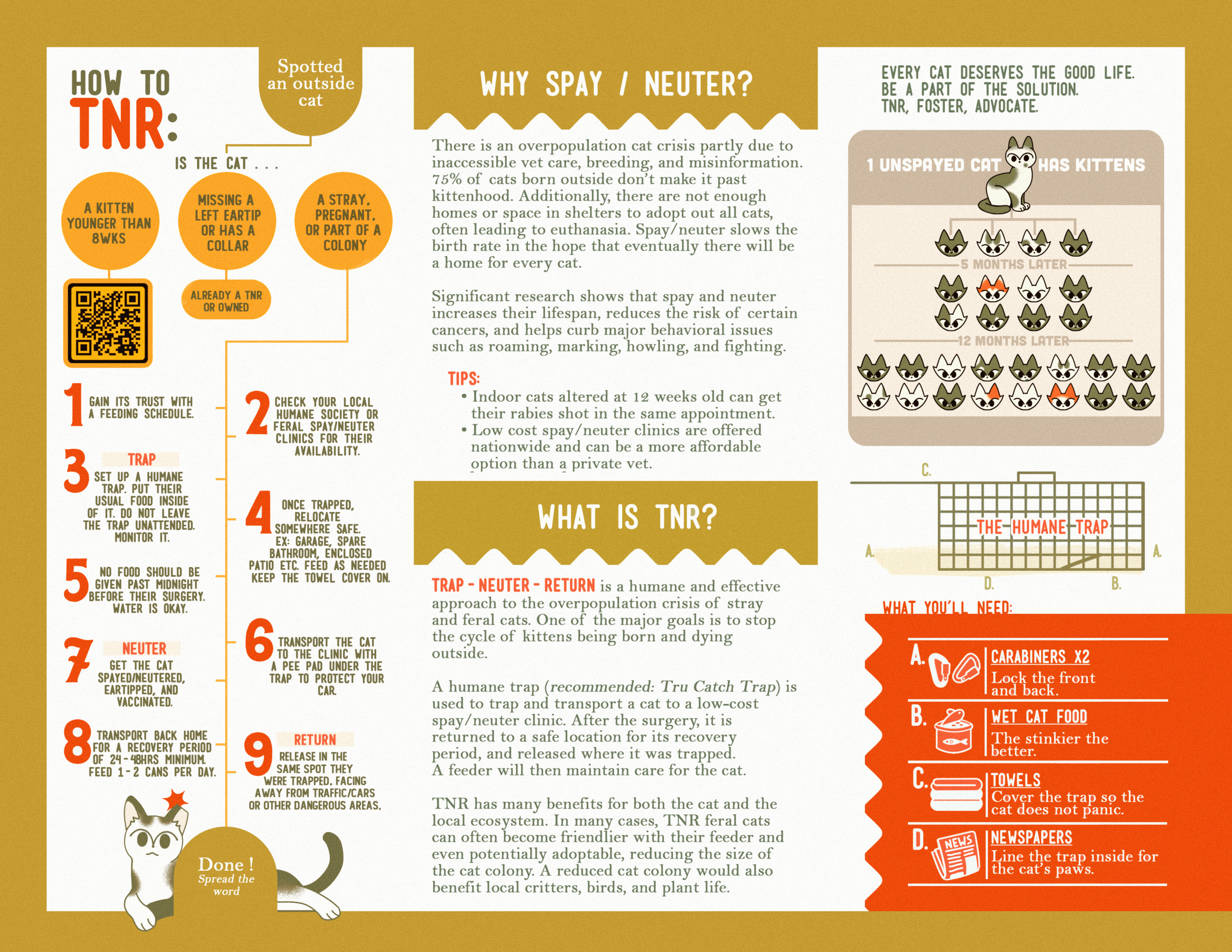
BEFORE YOU BEGIN
LEARN HOW TO TNR AND HELP SAVE MORE LIVES.
Make sure that you take an official TNR / Trap Neuter Return course, whether online, in-person, or trap with someone with experience before attempting yourself! TNR is a simple process but it is important to follow these guidelines for the safety of yourself and the cat(s) you are trapping.
The standard trap used is a Tru-Catch brand, as they tend to be safer for cats or kittens being trapped to avoid any sort of injury.
https://www.trucatchtraps.com/small-animal-traps/feral-cat-traps
Make sure you have all the supplies you’ll need. Things like:
- Carabiners (x2)
- Trap cover
- Newspaper or pee pad for the bottom of the trap
- Food / proper bait
- Tape (to label trap for the clinic)
- Space set aside (indoors)
Trapping and sterilizing one cat will hopefully not be the end of your journey into TNR! One cat is fantastic work, but there is always more to be done. Keep track of the other cats in your area without ear tips or known owners. Talk to your neighbors about who they may belong to and who is feeding them so that you can plan to trap them as well. Prioritize cats that may be pregnant or injured.
COURSES & VIDEOS
San Antonio Feral Cat Coalition Course: https://sanantonioferalcats.org/resources/#class
Feral Cat Coalition Form for Online Course: https://docs.google.com/forms/d/e/1FAIpQLSfx31C0OTtIGFG-2xZjhpi1P5imiUkOfbGDAUVfg4jSZxyOeQ/viewform
https://fixnation.teachable.com/p/tnr-training
https://www.youtube.com/watch?v=wF_omFE7Etc
https://www.youtube.com/watch?v=IarsSTLUdTw
For anyone outside of San Antonio, it should take a quick Google search for any local TNR courses near you, but the Feral Cat Coalition’s course is made to be a standard across the board.
WHY TNR WORKS & ADDRESSING CONCERNS
TNR is widely accepted across the country as the most effective and accessible way to help stop the overpopulation crisis of cats. We understand there are different concerns across the board with its efficacy, the safety of cats and worry for the local wildlife.
MYTH: FERAL CATS ARE NEGLECTED AND ARE SUFFERING EVEN AFTER BEING TNR’D.
Feral cats that are TNR’d are often put into the records of whichever organization sterilized and vaccinated them. Other rescues, like ourselves, work with the caretakers of these colony cats to always stay updated on what they need from food to veterinary care for any potential injury. They are not abandoned and often call a specific property or street their home. The City of San Antonio Animal Care Services allows feral cats to exist outdoors. We give them their best chance by making sure they are not reproducing and that they are healthy.
MYTH: FERAL CATS ARE KILLING BILLIONS OF BIRDS PER YEAR. TNR IS NOT AN EFFECTIVE SOLUTION.
There are several articles that debunk these statistics. The Smithsonian National Zoo study is often cited as the main source for opponents of TNR, even though it has been proven that the numbers used in the study were massively exaggerated. Alley Cat Allies has broken down the statistics and exaggerations in the study in detail. In the United States, there are 60-100 million feral and stray cats outdoors at any given moment. These studies propose that these cats lead to the death of anywhere from 1 billion to 4 billion birds per year. This is not including deaths from construction, collisions, poisonings, disease, etc. How many birds have you seen die in a window or vehicle collision versus a feral cat catching and killing it?
If this was truly the case, the country would have been devoid of birds a very long time ago and many more species would have been extinct. Not to mention, the amount of birds under this label that are invasive species, such as Starlings and Sparrows.
Humans have always been and always will be the largest threat to wildlife and specifically birds in the United States.
MYTH: NEW CATS WILL SHOW UP AND TAKE THE PLACE OF THE OTHERS.
New cats may show up to your colony because they no longer have food or shelter where they were originally living. Feral cats that are not fixed will often wander. “During an 11-year study of TNR at the University of Florida, the number of cats on campus declined by 66%, with no new kittens being born after the first four years of operation.”